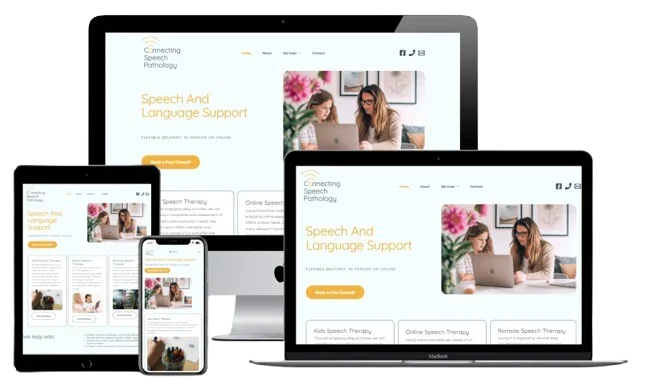
AHPRA-Compliant Website Design for Allied Health Businesses in Adelaide
AHPRA-Compliant Website Design for Allied Health Clinics
Clinics in speech pathology, psychology, occupational therapy, physiotherapy and other regulated health professions operate in a more tightly regulated environment than most other businesses. Ahpra’s advertising rules apply broadly to public-facing promotional content, including websites, social media, directory listings and other marketing materials.
Allied Health Websites
Running an allied health clinic means your website cannot just look good. It also needs to communicate clearly, build trust, and avoid advertising mistakes that could create risk for your business.
That does not mean you cannot market your clinic. It means your marketing needs to be accurate, balanced and carefully framed.
We help allied health clinics build websites that support visibility, trust and growth, while staying mindful of the advertising obligations that apply to regulated health services.

Why AHPRA Compliance Matters for Your Website
Ahpra’s advertising framework exists to protect the public by helping ensure health service advertising is accurate and not misleading. The official guidelines say advertising for a regulated health service must not be false, misleading or deceptive, must not use testimonials about the service or business, must not create an unreasonable expectation of beneficial treatment, and must not directly or indirectly encourage unnecessary use of regulated health services.
Ahpra also makes clear that “advertising” is broader than many clinic owners expect. It can include websites, social media, online listings, business cards, signs, public-facing letters and other promotional communications that attract people to a regulated health service.
For allied health clinic owners, that means a homepage headline, service page, practitioner bio, FAQ section, Google Business Profile wording, blog content and even some review-related activity can all become compliance issues if not handled carefully.
Common Website Risks Allied Health Websites
Clinical testimonials
This is one of the most common traps. Ahpra prohibits the use of testimonials or purported testimonials in advertising when they refer to clinical aspects of a regulated health service. That includes statements about symptoms, diagnosis, treatment or outcomes. A comment like “my child started speaking clearly after therapy here” is very different from “friendly staff and easy parking.” The first is high risk. The second is generally much safer.
Unsupported treatment claims
If a clinic claims a treatment is effective, can treat a condition, or produces a particular outcome, Ahpra expects that claim to be supported by acceptable evidence. The evidence framework emphasises source, relevance, inclusion, level, quality and strength. Claims that overreach the evidence base can become misleading.
Misleading condition lists
Ahpra’s own examples show that broad, unqualified lists of conditions can be problematic if they imply treatment effectiveness without proper context. A service may help manage some symptoms associated with a condition, but that is different from claiming to treat the condition itself.
Specialist language
Words like “specialist,” “specialises in,” “specialised,” or similar wording can mislead the public if the practitioner does not hold the relevant recognised specialist registration or endorsement. Ahpra advises that phrases such as “substantial experience in” or “working primarily with” are less likely to mislead.
Before-and-after style messaging
Ahpra warns that images and photos can create an unreasonable expectation of beneficial treatment, especially where the connection between treatment and the outcome shown is unclear, exaggerated or edited. This risk is not limited to cosmetic fields. Even more subtle “transformation” style messaging can be problematic if it implies predictable outcomes
Fear-based or urgency-based calls to action
Time-limited offers, health scare language and messaging that pressures people into treatment can cross into encouraging unnecessary use of regulated health services. Ahpra’s summary specifically notes that advertising should not encourage people to use a regulated health service where there is no clinical or therapeutic need.
Allied health is one of several sectors we work closely with, alongside other regulated and technical fields listed in our industry-specific website solutions overview.
A Better Approach to Allied Health Website Copy
A compliant website does not need to be bland. It just needs to be well written.
The strongest allied health websites usually focus on:
- what services are offered
- who the clinic helps
- the practitioner’s real qualifications and experience
- the clinic’s process and approach
- practical information for clients
- clear next steps for booking or enquiry
This style of website content tends to be stronger commercially as well. It builds trust because it is clear, professional and believable.
Instead of overstating outcomes, a compliant website can explain how the clinic works, what to expect, what areas the practitioner commonly supports, and how clients can take the next step to see whether the service is appropriate for them.
What We Help Allied Health Clinics Avoid
At Amplify Web Design, we help clients reduce common digital risk areas such as:
- patient review content being reused in the wrong way
- practitioner bios that overstate credentials
- service pages that make unsupported claims
- AI-generated content that sounds persuasive but introduces compliance risk
- copy that implies guaranteed outcomes
- comparison claims that are difficult to substantiate
- promotional wording that creates an unnecessary sense of urgency
- telehealth or medication-related marketing that may also trigger Therapeutic Goods Administration concerns
That last point matters especially for clinics promoting services linked to therapeutic goods. The TGA states that advertising prescription-only medicines to the public is prohibited, and promoting a health service, including telehealth, as a way to obtain a prescription-only medicine is likely to amount to advertising prescription-only medicines.
Allied Health Website FAQs
Why is allied health web design different from other industries?
Allied health websites must balance professionalism, trust, and compliance. Many common marketing tactics (such as testimonials or outcome claims) may be restricted, so trust must be built through structure, tone, and clarity instead.
Can allied health websites use testimonials?
They need to be very careful. Testimonials that refer to clinical aspects such as symptoms, diagnosis, treatment or outcomes are not permitted in advertising.
Do you work with different allied health disciplines?
Yes. We work with practices across speech pathology, occupational therapy, psychology, physiotherapy, and other allied health services, adapting structure and language to suit each discipline.
Can AI-written content create compliance risk?
Yes. If AI-generated copy makes unsupported claims, overstates outcomes or introduces misleading language, the clinic is still responsible for the advertising. This follows from Ahpra’s rules that the advertiser is responsible for the content it controls.
Can you help if we already have a practice website?
Absolutely. Many practices start with a website or SEO audit to identify clarity, compliance, or visibility issues before deciding on updates or redesign.
Our Process for AHPRA-Aware Website Design
01.
Messaging Review
We look through your homepage, service pages, practitioner profiles, blog content and call-to-action language to spot obvious red flags.
02.
High Risk Wording
This includes things like outcome claims, specialist terminology, testimonials, implied guarantees, before-and-after style messaging, and unsupported evidence statements.
03.
Clear & Trust Copy Writing
Our goal is not to strip away your personality. It is to present your clinic in a way that is persuasive, clear and more defensible.
04.
Stronger Structure
Good website structure improves user experience and SEO while making your clinic easier to understand. That often reduces the temptation to rely on hype-based claims.
05.
Safe Future Content
We can also help with service-page templates, blog structure, practitioner bio wording and internal review processes so your team has a more consistent standard going forward.
Allied health websites must balance trust, clarity, and compliance a core focus of our healthcare website design approach.
Who This Is For
We commonly see these issues arise on websites for:
- speech pathology clinics
- psychology practices
- occupational therapy providers
- physiotherapy clinics
- counselling practices
- multidisciplinary allied health clinics
- telehealth-based health services
- private practices growing their online presence
If your clinic is trying to improve SEO, attract more enquiries, or refresh an outdated website, this is the ideal time to review your messaging through an Ahpra-aware lens.
Why Work With Amplify Web Design
Most web designers know design. Fewer understand SEO. Very few understand the extra care required when marketing a regulated health service.
We work with service businesses that need websites to perform in the real world. For allied health clinics, that means balancing three things at once:
- professional credibility
- search visibility
- advertising risk awareness
Our role is not to provide legal advice. Ahpra itself says it does not provide approval or legal advice on whether specific advertising is compliant, and advertisers should seek independent advice where needed.
What we do provide is a more thoughtful, informed and careful approach to website strategy and copy so your clinic is less likely to drift into obvious problem areas.
Important Note
This page provides general information only. It is not legal advice and should not be relied on as a substitute for independent legal or professional advice. Ahpra’s official advertising guidelines, acceptable evidence framework and profession-wide examples should always be reviewed alongside your own circumstances.
Need an AHPRA-Aware Website Review?
If your clinic website has grown over time, been written by multiple people, or now includes AI-generated copy, it may be worth reviewing it before problems arise.
Amplify Web Design can help you build or refine an allied health website that is clearer, more trustworthy and better aligned with the expectations around regulated health service advertising.